Review · Policy News
Home Energy Natural Gas Michael Kern What I Cover My focus spans the global energy landscape and the technologies reshaping it, specifically focusing on oil and gas, renewables, and tech-driven market... More Info Set us as your preferred Google source Premium Content By Michael Kern - Oct 06, 2026, 6:00 PM CDT APA sold its U.S. gas at negative $2.20 per Mcf last quarter, yet expects about $950 million in pretax cash flow from a gas trading book tied to global LNG prices. Venture Global's second-quarter net income jumped 266% to $1.3 billion, and ConocoPhillips, a partner in Qatar's Ras Laffan LNG, just signed on for 20 years of its supply.
The U.S. share of China's LPG imports jumped from 10% to 51%, a quiet windfall for Antero that its share price still hasn't caught up to. When Iran struck Qatar's Ras Laffan complex in March and knocked out 17% of the country's LNG export capacity , the trade seemed pretty straightforward. Buy the American exporters, sit back and wait for Europe and Asia to come knocking for cargoes that didn't need to sail through the Strait of Hormuz.
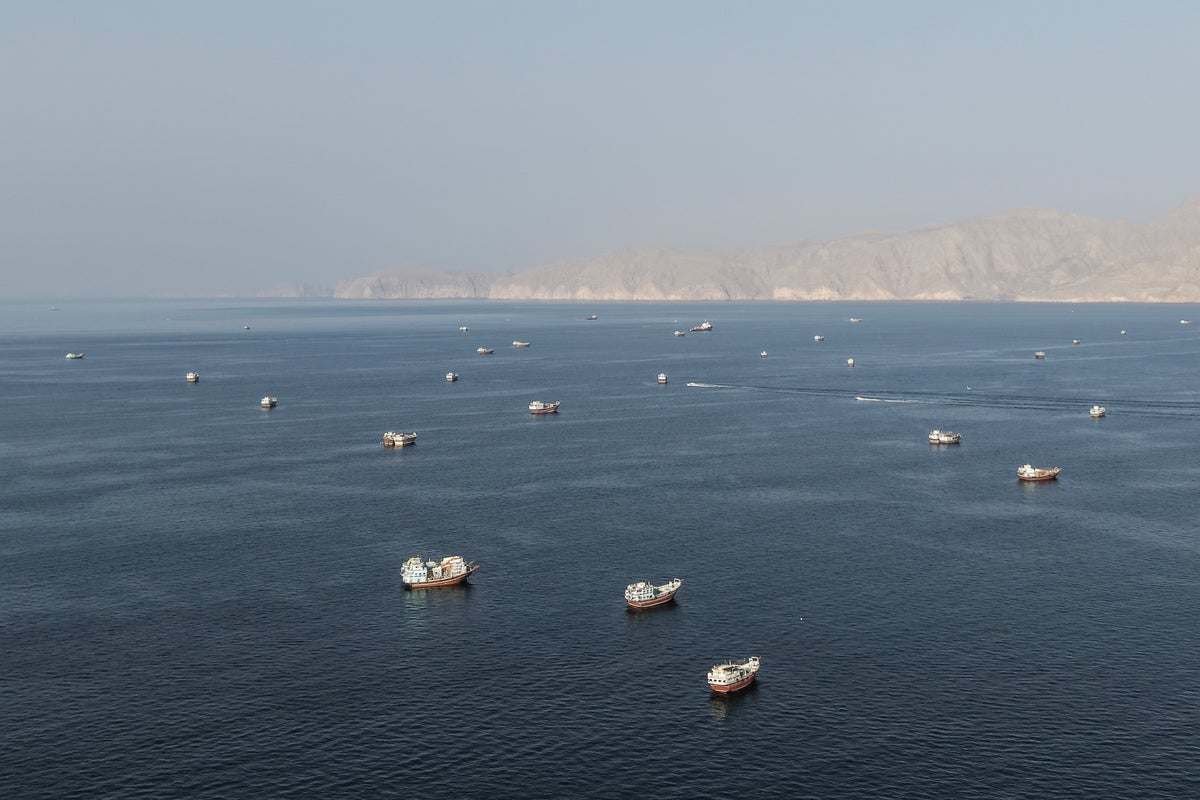
Cheniere did exactly what everyone expected it to do, shipping more LNG than it did a year ago and raising its 2026 guidance for the second quarter in a row. Nearly seven months into the war, the strait is still a mess. QatarEnergy just extended force majeure on its LNG deliveries through the end of November, flows through Hormuz are still down more than 75% from prewar levels, and on Tuesday an LNG carrier owned by Greek shipping magnate Maria Angelicoussis became the latest vessel hit near the strait.
Gas prices in Europe and Asia climbed to their highest levels since the 2022-2023 energy crisis in September, while back home, Henry Hub has been stuck around $3. As the crisis has dragged on, though, a handful of less obvious companies have started making just as strong a case for themselves, from an IPO most of Wall Street had written off to an oil producer that, at one point this year, was effectively paying buyers to take its gas. Venture Global Venture Global Inc. (NYSE: VG) had about as rough a first year on the public markets as an energy company can have.
The Louisiana exporter priced its IPO at $25 a share in January 2025, and by the end of the year the stock was changing hands in the single digits. Investors hated the business model, which leaned on selling LNG into the spot market while long-term customers, including Shell and BP, waited on their contracted cargoes and eventually took the company to arbitration over it. As it turns out, a company built to sell into the spot market is exactly what you'd want to own when the spot market goes haywire.
Venture Global's net income jumped 266% to $1.3 billion in the second quarter on $4.6 billion in revenue, and management bumped full-year adjusted EBITDA guidance up to between $8.7 billion and $9.1 billion. Baked into that forecast is an assumption that it'll earn somewhere between $12.50 and $13.50 per MMBtu in liquefaction fees on its remaining unsold cargoes, on gas that costs about a quarter of that to buy in the U.S. The long-term buyers are coming around, too.
On Oct. 1, ConocoPhillips signed a 20-year deal to take 1 million tonnes a year from Venture Global starting in 2030, and CEO Mike Sabel said it reflected confidence in the company's ability to deliver LNG "quickly and at scale." ConocoPhillips also owns a 30% stake in QatarEnergy's Ras Laffan LNG project, so this is a bit like a landlord quietly putting down a deposit on an apartment across town. None of that has made the stock easy to own. Shares rose more than 50% in the first few weeks of the war, fell 5% on the day the company posted the best quarter in its history and have bounced around in the low-to-mid teens since.
That's still about half of what IPO buyers paid, and with so much of the upside riding on spot prices, I'd expect a good chunk of those gains to disappear if ships ever start moving freely through Hormuz again. APA Corp In the second quarter, APA Corp. (Nasdaq: APA) realized an average of negative $2.20 per Mcf for the natural gas it produced in the U.S., which means that on paper, the company was paying to get rid of it. Prices at the Waha hub in West Texas have spent much of the year underwater as Permian pipelines max out, and APA ended up curtailing about 137 MMcf per day of production in response.
And yet APA might be one of the better LNG plays in the U.S. market, mostly thanks to a deal that predates the war by years. The company sells 140,000 MMBtu per day to Cheniere at prices pegged to international LNG benchmarks under a contract that started in 2023 and runs through 2037, and between that and a firm transportation business that buys gas in the Permian and resells it on the Gulf Coast, APA expects to clear about $950 million in pretax cash flow from gas trading this year. Barclays analyst Betty Jiang told CNBC in May that APA has "the greatest exposure to LNG prices in our coverage," and it showed up in the second-quarter results : adjusted earnings of $1.89 per share, $738 million in free cash flow and $2.3 billion in debt paid down since the end of 2024.
The stock had climbed 89% over the 52 weeks leading into that report, though APA is still an oil company at heart, and when crude sells off on ceasefire chatter, it goes right along with it. Golar LNG Golar LNG Ltd. (Nasdaq: GLNG) spent eight years parking a converted floating liquefaction vessel off the coast of Cameroon, and according to Wood Mackenzie , that one unit, the Hilli, earned back its roughly $1.3 billion conversion cost and generated around $2.1 billion in tolling EBITDA along the way. Golar is also the only company offering floating LNG on a lease-and-operate basis, so if you're a country sitting on gas with no export terminal and no appetite for building one onshore, Golar is pretty much the only number to call.
That's the logic behind the fourth unit Golar ordered in August , a $2.45 billion, 3.5 MTPA vessel from China's CIMC Raffles that should be ready around the end of 2029. Golar hasn't found a customer for it yet. The company is betting that after watching a fifth of the world's LNG supply get trapped behind Hormuz, somebody is going to want floating capacity in a hurry, and it's pitching this vessel as the earliest available anywhere.
Commodity-linked fees have already been paying off, as Hilli's contract is partly tied to Brent and Dutch TTF prices, and that piece brought in $37 million in the second quarter, more than triple the first quarter's take. The timing could have been better, though. Hilli's Cameroon contract wrapped up in July, and the vessel is headed for a $350 million refurbishment before starting a 20-year charter in Argentina in the second half of 2027, so the unit that had been cashing in on high prices is sitting in a shipyard during the best LNG market in years.
Shares jumped 7.7% after the fourth unit was announced and now trade at nearly 40 times earnings, which feels a little rich given all that. Then again, Goldman Sachs has been running a strategic review for Golar since March, and a buyout would change the math pretty quickly. Equinor When Germany's Uniper signed a 15-year gas supply deal with Equinor ASA (NYSE: EQNR) in Stavanger in late August, CEO Michael Lewis told Reuters , "For us it's really important that we rebuild our portfolio." Uniper is the same utility Berlin had to rescue in 2022 after Russian gas stopped flowing, and now it's locking in about 2.8 billion cubic meters a year of Norwegian gas through 2041.
Europe needs every molecule it can get right now, with EU storage sitting around 67% in mid-September, and Equinor CEO Anders Opedal said in July that the continent won't necessarily hit 80% before winter. Norwegian gas moves by pipeline and doesn't have to sail past anyone's drones, and Equinor's second-quarter results show what that's worth. The company realized $15.79 per MMBtu for piped gas in Europe, while its U.S. gas fetched just $1.96 .
Trading has been the other windfall. CFO Torgrim Reitan said the trading result was almost twice what Equinor books in a normal quarter, and the company doubled its 2026 buyback to $3 billion. Those buybacks also give you a decent read on the stock, since Equinor has to disclose what it pays.
It averaged about NOK 314 a share around the start of July and roughly NOK 419 by mid-September. Third-quarter numbers are due Oct. 28. Of the five companies here, Equinor is probably the closest thing to a pure Hormuz-fear trade, and if the strait genuinely reopens, I wouldn't expect that European premium to stick around for long.
Antero Resources Corp. With everyone focused on LNG, it's easy to forget that the Persian Gulf also ships out an enormous amount of propane and butane, and that's been stuck behind Hormuz, too. Antero Resources Corp. (NYSE: AR) produces a lot of both out of Appalachia, and China has been buying.
On Antero's second-quarter call , management pointed out that the U.S. share of China's LPG imports climbed to 51% in the second quarter, up from just 10% in June 2025, back when tariffs had pushed Chinese buyers elsewhere. U.S. propane exports hit a weekly record of 2.63 million barrels per day in May, and the company said propane and butane are now "fiercely competing for terminal space" on the Gulf Coast. Antero got $44.26 per barrel for its C3+ NGLs, its best price since 2022.
What I find most interesting is how little of this has to do with natural gas prices. Antero's gas sales revenue was basically flat year over year at around $688 million, but NGL revenue jumped 22%, and adjusted EBITDAX climbed 57% even with Henry Hub down 16%. The stock, meanwhile, has spent most of the fall in the mid-to-high $30s, nowhere near its 52-week high of $45.75.
A slight earnings miss didn't help, and freight rates for gas carriers have been eating into export margins, but if Gulf LPG stays bottled up through winter, Antero might be the most overlooked name on this list. By Michael Kern for Oilprice.com More Top Reads From Oilprice.com Energy Shock Wipes $264 Billion Off the World's Top Mining Stocks IPO Market Stalls Four Months After SpaceX's $75 Billion Debut Europe's Power Grid Is Digitalizing Faster Than Regulators Can Keep Up Download The Free Oilprice App Today Back to homepage Michael Kern What I Cover My focus spans the global energy landscape and the technologies reshaping it, specifically focusing on oil and gas, renewables, and tech-driven market... More Info Leave a comment EXXON Mobil -0.35 Open 57.81 Trading Vol. 6.96M Previous Vol. 241.7B BUY 57.15 Sell 57.00