Review · Policy News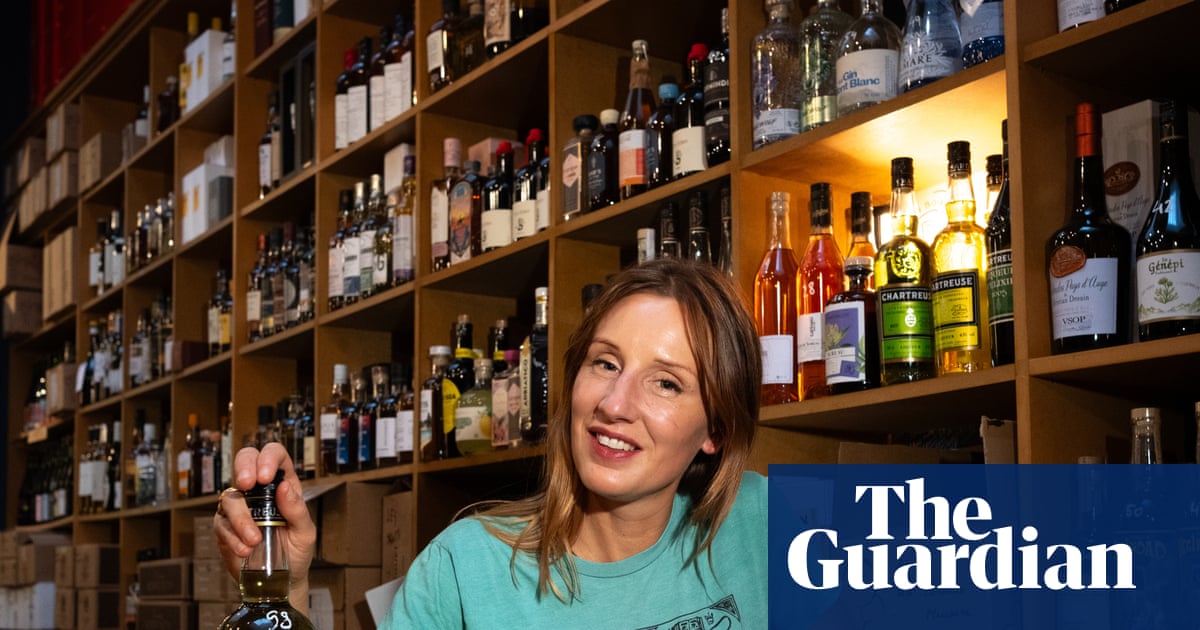
It’s just after 9pm in drizzly Belleville, Paris. Too late for cocktails, too early for bedtime, but up the steep hill that straddles the 19th and 20th arrondissements, digestif hour is in sight. In the past few years, more and more Parisians have been reaching for a glass of Chartreuse, an intensely green/yellow herbal liqueur with a folkloric backstory involving Carthusian monks, cholera and a recipe of omertà-like secrecy.
There are several types, of varying strengths, colours and prices, but none are that easy to find. At La Commune, a cultish leftwing hangout in Belleville, where tequila shots cost less than €4, they finished the Chartreuse the night before. A few doors down at Les Triplettes de Belleville, I spot a third-full bottle of the cheaper yellow stuff sandwiched between the gins.
Hugo Césard, the 19-year-old bartender, pours me a €7 shot, my third of the night. On first taste, it behaves like ouzo: sweet, fennelly, cloyingly thick. Then you hit the more complex notes, which are closer to an Alpine meadow.
This one is a navy-strength 40% ABV, while the green version is about 55%. In theAlps, you’re more likely to drink it in hot chocolate . To down it at room temperature is sacrilege, unless “you want to get very drunk”, says Césard.
For me, alas, that ship has already sailed. Hugo Césard pours a shot of Chartreuse for Morwenna Ferrier at Les Triplettes de Belleville in Paris. Photograph: Magali Deporte/The Guardian Round the corner at Combat, an edgy-cool bar run by women and frequented by thoughtful students and dressed-up boomers, they mostly serve it cold in a crystal-cut sipping glass or a cocktail called The Last Word, mixed with gin, lime and a maraschino cherry.
I try both. Combat bartender Marie-Paule Corby, 30, loves its “complicated flavour”, though outside, a customer called Nour (also 30) is not a fan. “I only ever drank it in the Alps.
Too sweet for me,” she says, and sticks out her tongue in disgust. You’ll find Chartreuse in most ambitiously stocked bars, but interest among younger drinkers shot up mostly after the pandemic, says Theo, who works in La Cave Pigalle, a small chic wine shop in Pigalle in the 9th arrondissement. The same thing happened in the US, where it became a “sleeper” ingredient during the giddy era of the craft cocktail movement of the early 00s.
Then came lockdown, and a taste for the weirder, top-shelf stuff grew further still, particularly here. Brother Laurent, a Carthusian monk, making the liqueur in a factory near the Grande Chartreuse monastery in Dauphine, south-eastern France, in 1953. Photograph: Bert Hardy/Getty Images At the award-winning, taxidermy-filled bar Satan’s Whiskers in east London, it appears in various cocktails.
The Pig on the Beach on Dorset’s Jurassic coast sells five different types, one of which – the Eau de Vie from 1941 – costs £50 a measure. It’s always been pricey, though disaster hit in 2021 when the Carthusian monks suddenly announced plans to cap production in order to “protect their monastic life and devote their time to solitude and prayer”. In a letter in 2021 , they said: “Making millions of cases does not make sense in today’s environmental context and will have a negative impact on the planet in the very short term”, though rumour has it the decree came from the Vatican, which pointedly reminded the monks “that they were monks, not businessmen” .
Today, according to a spokesperson for Chartreuse, the brand is shifting its focus back toward herbalism. Back in Paris, at the beloved bottle shop La Cave de Belleville, Chartreuse is scarce. “We have an allocation – 24 bottles of green and 24 bottles of yellow, but that’s for a year”, says Remy Pousse-Vaillant, 46, a knowledgable liquor expert with a Kandinsky tattoo.
There are currently five on the shelf, but that’s it until the next order. Under French consumer law, any item displayed with a visible price is considered sellable, which is partly why some caves stash the good stuff in the basement. The brand won’t divulge the numbers, only to say that they keep half and export half to the US, Japan, Australia, and “countries surrounding the Alpine arc”.
They only make what they need to sustain the order, though Pousse-Vaillant thinks it’s not much over 1m bottles worldwide. Like most wine shop staff, he will neither confirm nor deny if he’s got Chartreuse in the basement. Chartreuse is popular at spots such as Les Triplettes de Belleville in Paris.
Photograph: Magali Deporte/The Guardian Still, if we’ve learned anything from Birkin economics , it’s that few things sharpen our appetite like the prospect of scarcity. Is that why Chartreuse is back on the map? “Yes, partly,” he says.
The stuff that creeps on to cocktail menus – espresso martinis, negronis, cosmos – “used to come from TV shows like Mad Men or Sex and the City”. Now it’s aggressive advertising campaigns meticulously engineered by savvy publicists. Take Campari, which turned Aperol into a global aesthetic, and M&S’s Clemencello, which, according to the supermarket, will be the most in-demand drink this Christmas, despite the fact that most of us have never heard of it.
Chartreuse has a much lower profile. I only know about it because Jay Gatsby kept it in his secret cocktail cabinet – and from Bruce Springsteen’s memoir, in which he reveals he got hooked on the stuff when he first started drinking. Tom Waits is also a fan.
The story of Chartreuse began in earnest in 1605 when the Carthusian monks – herbalists, scholars and expert alcohol distillers – were entrusted with the recipe by Duke François Annibal d’Estrées. His manuscript outlined a 130-ingredient “elixir of long life”, which contained plants, barks, spices and roots and took the monks over a century to decipher. Finally they landed on what they call the “élixir végétal”, which is the base of today’s Chartreuse.
The monks continued to develop the elixir while also trying to create a liqueur that was easier to drink. The first version was created in 1838 and was white, but variations in green and yellow followed in 1840, the green being more herbal in taste and the yellow sweeter. The green “health elixir” version of the recipe was even given to cholera patients – while it clearly wouldn’t have treated the disease, it may have provided some pain relief.
Bottles of yellow and green Chartreuse in the bottle shop La Cave de Belleville in Paris. Photograph: Magali Deporte/The Guardian Today, just three people in the world know the recipe, and they’re all monks. It’s thought that the original two monks only shared the recipe with the third because one of the two was considering retiring.
They are helped in the distillery by five lay people, who are also anonymous. It’s a fine story and, as social media weasels its way into everything we eat or drink, perhaps it was only a matter of time before it landed on Chartreuse. The majestic labels, the photogenic shade of “grellow”, the mythological origins – and now the sheer dearth of the stuff.
It all feels perfectly suited to the trend-fatigued in 2026, says Pousse-Vaillant. “In this era of AI, of Meta and of constantly [being online] I think people want something real, something authentic, something unchanged.” And the brand agrees. “As the monks say: ‘the cross stands firm while the world turns,’” a Chartreuse spokesperson said.
“It is a good motto because the world is difficult right now. So what else can we do?”
Source: The Guardian